
 English
 Español
 日本語
 русский
Putting on nitrile gloves looks simple, and most of us have done it hundreds of times. Yet in busy clinics, food plants, and industrial workshops, small habits decide whether a glove protects you or ...
READ MORE
News Category
Product Category
How to Test for a Nitrile Allergy: Patch Tests, Symptoms, and Glove Choices
Content
- 1 Why “Nitrile Allergy” Is Often a Chemical Allergy
- 2 Signs You Should Test Rather Than Guess
- 3 How to Test for a Nitrile Allergy: A Step-by-Step Approach
- 4 Testing Options at a Glance
- 5 What a Nitrile Allergy Test Cannot Tell You
- 6 Choosing Gloves After a Reaction
- 7 When to Get Emergency Care
- 8 Final Thoughts
If your hands itch, sting, or break out after wearing nitrile gloves, you may be wondering how to test for a nitrile allergy. The first thing to know is that a glove reaction is not always an allergy to nitrile itself. Nitrile is a synthetic rubber, and true allergy to the polymer is uncommon. Many reactions involve residual manufacturing chemicals, powder, friction, or irritants trapped against the skin. A clinician can help identify the pattern. This guide is general information, not a diagnosis or a substitute for medical care.
Why “Nitrile Allergy” Is Often a Chemical Allergy
Nitrile examination gloves are made from acrylonitrile-butadiene rubber. Curing systems and additives give the material flexibility and strength, and trace residues can remain in the finished glove. In sensitive people, those residues rather than the polymer may trigger contact dermatitis.
- Irritant contact dermatitis. This is not an immune reaction. Sweat, powder, friction, or repeated hand washing can damage the skin barrier, leaving hands dry, cracked, or sore.
- Allergic contact dermatitis. This is a delayed immune reaction, often appearing 24 to 72 hours after exposure. It can cause redness, itching, swelling, and small blisters and may involve rubber accelerators or other additives.
- Immediate allergy. This is rare with nitrile but possible. Hives, swelling, wheezing, or breathing difficulty within minutes of glove use is a medical emergency.
Because timing changes the testing plan, start with a detailed history: when symptoms begin, how long they last, which gloves were used, whether powder was present, and what other products touched your hands.
Signs You Should Test Rather Than Guess
Testing is worth discussing if the same gloves bring the same rash, symptoms improve when you stop wearing them, or the reaction spreads beyond the glove area. Get urgent help for swelling of the lips, tongue, or throat; wheezing; shortness of breath; widespread hives; dizziness; or faintness after glove use.
How to Test for a Nitrile Allergy: A Step-by-Step Approach
There is no single validated “nitrile allergy test” for home use. Diagnosis usually combines exposure history, physical examination, and selected clinical tests. The right sequence depends on whether the reaction looks delayed or immediate.
1. Keep an exposure and symptom diary
Record the gloves you wear, wearing time, whether they are powdered or powder-free, and any soaps, sanitizers, or chemicals used at the same time. Note when itching or rash begins and how long it takes to settle. Photographs can help. This does not confirm allergy, but it gives a clinician the pattern needed to choose the right test.
2. Ask about patch testing for delayed reactions
For suspected delayed allergy, a dermatologist or allergist may recommend patch testing. Small amounts of allergens are applied to the back under tape and checked over several days. A standard series often includes rubber accelerators such as thiurams, carbamates, and benzothiazoles, because these are common causes of glove-related allergic contact dermatitis.
Testing with a piece of the glove itself is sometimes considered, but it is not standardized. It can irritate the skin and may not distinguish allergy to the polymer from allergy to a residue. Glove-piece testing should be guided by a specialist, not used as a do-it-yourself experiment.
3. Discuss immediate allergy testing if symptoms are quick
If hives, swelling, or breathing symptoms appear within minutes, a clinician may evaluate for immediate IgE-mediated allergy. This can include a careful history and, in a specialist setting, skin prick testing or blood testing for specific antibodies. However, there is no widely validated specific IgE test for the nitrile polymer itself. Testing may focus on latex or other glove components to rule out alternative causes.
4. Use a supervised use test, not a home challenge
An elimination and reintroduction trial can be useful, but it should be planned with a clinician when there is a history of significant reactions. A supervised use test may involve wearing a different glove type for a short, observed period. This is not the same as putting on a glove at home and waiting to see what happens. A severe reaction can develop quickly, and a short negative trial does not prove that a delayed reaction will not occur.
5. Review the glove and the work process together
Sometimes the fix is not a new material but a different finish. Powdered gloves can carry chemical residues, and powder-free gloves reduce that exposure. Frequent hand washing, alcohol sanitizer, and occlusive gloves can also worsen irritant dermatitis. A workplace safety or occupational health review can help identify whether the trigger is the glove, a chemical, or both.
Testing Options at a Glance
| Approach | What it checks | Best used when | Limitations |
|---|---|---|---|
| Patch test | Delayed allergic contact dermatitis to accelerators or additives | Rash appears hours to days after wear | Not for immediate reactions; glove-piece testing is non-standard |
| Specific IgE blood test | Antibodies linked to immediate allergy, when a relevant allergen is available | Quick hives, swelling, or breathing symptoms | No validated test for nitrile polymer itself; allergen panels vary |
| Skin prick test | Immediate IgE reaction to a specific extract | Immediate symptoms under specialist review | Needs specialist setting; no standard nitrile extract |
| Supervised use test | Real-world tolerance to a specific glove type | Irritant or additive reaction is suspected | Not a DIY challenge; can trigger severe reactions |
| Exposure review | Glove type, powder, lot, duration, and co-exposures | Any glove-related rash | Does not confirm allergy by itself |
What a Nitrile Allergy Test Cannot Tell You
A test result is only one part of the picture. A negative patch test does not prove that every glove will be safe, because the panel may miss a specific additive or because the reaction may be irritant rather than allergic. A positive patch test to a rubber accelerator does not automatically mean you are allergic to nitrile polymer. It means your skin reacted to a chemical used in some rubber products, and you may need to ask manufacturers about the curing system and residue profile of the gloves you use.
It also helps to be precise about the word “allergy.” A clinician may diagnose irritant contact dermatitis, allergic contact dermatitis, or an immediate hypersensitivity reaction. Each has a different management plan.
Choosing Gloves After a Reaction
If you buy gloves for a team, start with powder-free nitrile and ask suppliers for clear information about accelerators, residues, and lot consistency. A powder-free glove is not automatically hypoallergenic, but it removes powder as a carrier and reduces one source of irritation. For healthcare, food, industrial, and biosafety settings, the right choice also depends on the task, fit, length, and required barrier performance.
Our medical-use nitrile gloves include powder-free options in multiple lengths and sizes. If you are reviewing specifications before a purchase, the nitrile glove buyer’s guide explains how thickness, texture, and finish affect performance.
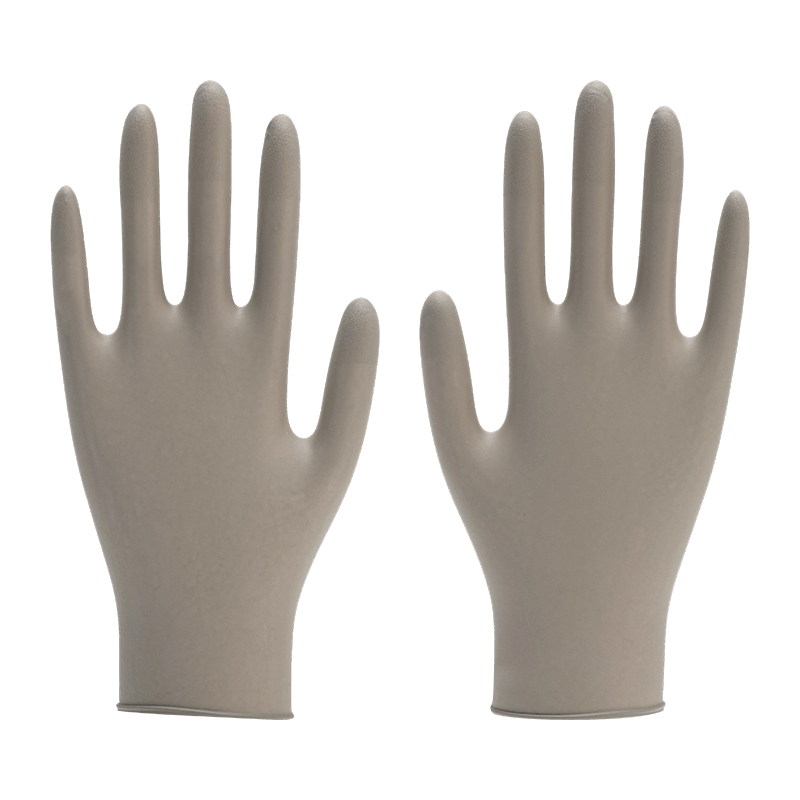 9-Inch Medium Powder-Free Medical Nitrile GlovesView the 9-inch medium option in the medical powder-free nitrile series, with blue or black color and customizable weight for wholesale specification review.View Product →
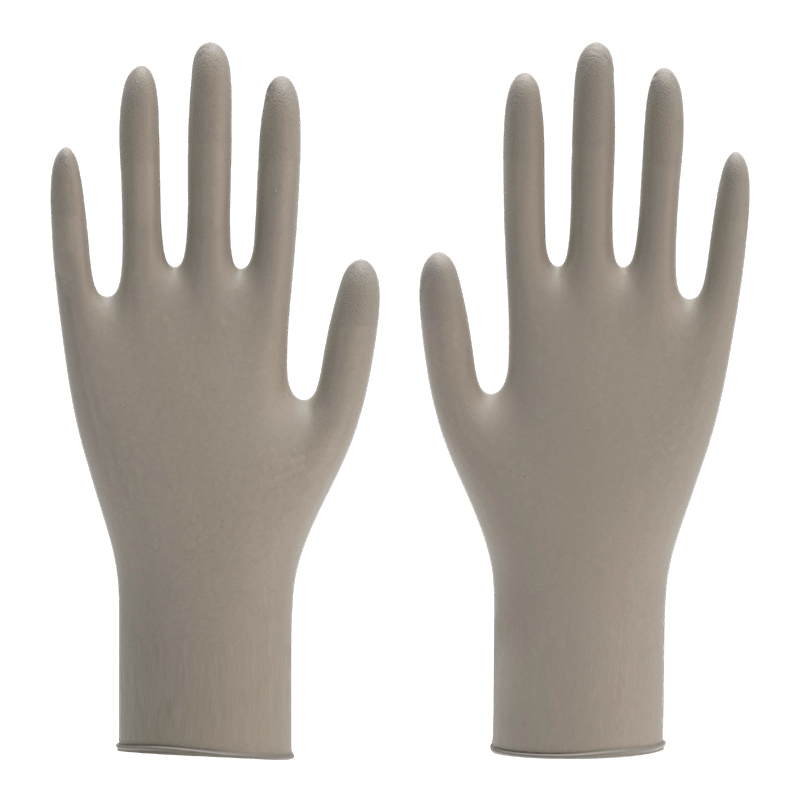 12-Inch Large Powder-Free Medical Nitrile GlovesReview the 12-inch large option in the medical powder-free nitrile series, supplied wholesale with blue or black color and customizable weight.View Product →
For anyone with a confirmed allergy, the final decision should be based on clinical advice and an evaluation that identifies the specific trigger. A glove that works for one person may not suit another, and a supplier should be willing to discuss raw materials and process controls in detail.
When to Get Emergency Care
Seek urgent help for swelling of the lips, tongue, or throat; wheezing; shortness of breath; widespread hives; a drop in blood pressure; or feeling faint after glove exposure. These can be signs of a severe immediate reaction. Remove the glove if you can do so safely, and follow your emergency care plan if you have one.
For delayed rashes, make an appointment with a dermatologist, allergist, or occupational health clinician. Bring your symptom diary, a sample of the glove packaging, and the safety data sheet if one is available.
Final Thoughts
Testing for a nitrile allergy is not a single at-home test. It is a clinical process that starts with a detailed history and may include patch testing, immediate allergy evaluation, or a supervised use test. Most glove reactions are not caused by the nitrile polymer alone; irritants, powder, and rubber additives are common contributors. If you react, document the pattern and get qualified advice. Then choose gloves with the right material, finish, and fit for the task.
Featured Products
Recommended Products
News
-
-
Few questions reach our team as often as this one: how long do nitrile gloves actually last? As a manufacturer of medical examination gloves, we speak with purchasing managers every week who want a c...
READ MORE -
In our years of producing nitrile gloves for medical, industrial, food and biosafety customers, the question buyers ask most often is about thickness. Can you reliably tell a 4 mil glove from a 6 mil...
READ MORE -
Choosing the right disposable glove size is one of those small decisions that makes a big difference once you are actually wearing them. A glove that fits well lets you work comfortably for hours, ke...
READ MORE
Get A Free
Custom Quote!
Custom Quote!

We are committed to providing integrated solutions for nitrile gloves and non-woven products.
Get a Quote
Disposable Gloves
Quick Links
E-mail
gatherlucky-sales5@nt-huifu.com
Call Us
+86-18012229099
+86-18012229096
+86-18012229099
AddressNo.7 Wenzhou Road,Economic Development Zone,Shuyang County,Suqian, Jiangsu Province, China, 223600
copyright © Jiangsu Complete Sincerity Medical New Materials Co.,Ltd. All rights reserved.
 Registration Number: 2021200 / 2021200
This website is intended for users outside of China