
 English
 Español
 日本語
 русский

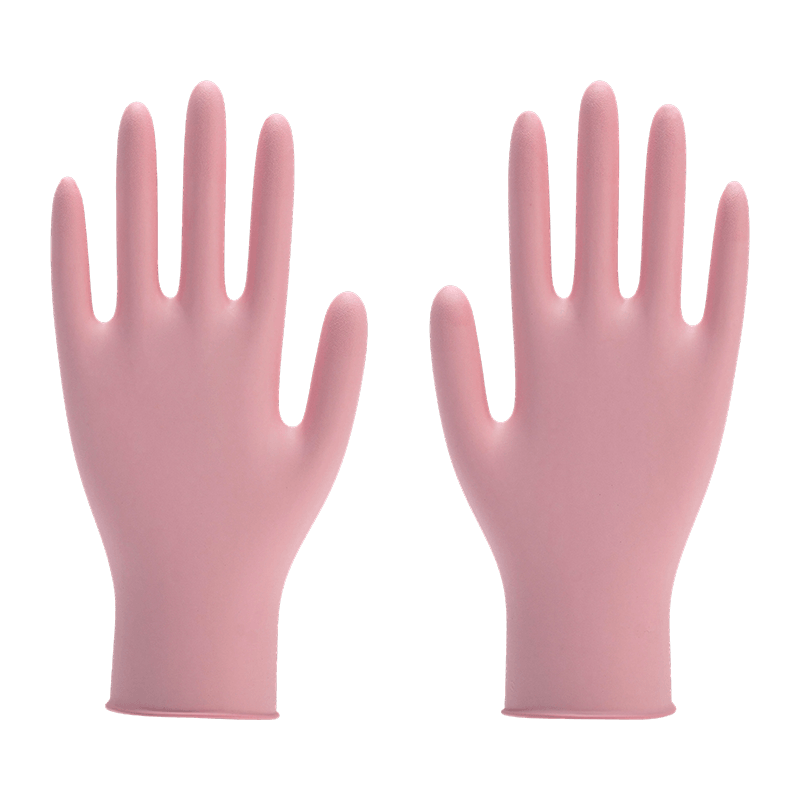
Putting on nitrile gloves looks simple, and most of us have done it hundreds of times. Yet in busy clinics, food plants, and industrial workshops, small habits decide whether a glove protects you or ...
READ MORE
News Category
Product Category
How to Measure Thickness of Nitrile Gloves: A Manufacturer's Practical Guide
Content
In our years of producing nitrile gloves for medical, industrial, food and biosafety customers, the question buyers ask most often is about thickness. Can you reliably tell a 4 mil glove from a 6 mil glove just by looking? Not really. Thickness is one of the few performance characteristics you can measure yourself in under a minute, and once you know how, sourcing decisions become much easier. This guide explains what the mil rating means, where to measure, which tools to use, and how to read the numbers the way a manufacturer does.
What Does "Mil" Mean in Glove Thickness?
When a nitrile glove spec sheet says 4 mil or 8 mil, mil is a unit of length equal to one-thousandth of an inch. It is not short for millimeter, even though the two are often confused because both start with the same three letters. One mil equals 0.0254 mm, so a 6 mil glove is roughly 0.152 mm thick - similar to a thin plastic bag as a raw number, but with far greater elasticity and puncture resistance.
| Mil | Inches | Millimeters |
|---|---|---|
| 3 | 0.003 | 0.076 |
| 4 | 0.004 | 0.102 |
| 5 | 0.005 | 0.127 |
| 6 | 0.006 | 0.152 |
| 7 | 0.007 | 0.178 |
| 8 | 0.008 | 0.203 |
| 9 | 0.009 | 0.229 |
| 10 | 0.010 | 0.254 |
Most disposable nitrile gloves fall between 3 and 8 mil. Anything under 3 mil is uncommon in professional use, while 9 mil and above is reserved for heavy industrial work. When buyers ask for a "standard" glove, they are usually describing something in the 4 to 6 mil band.
Where on the Glove Should You Measure?
Nitrile gloves are not one uniform sheet of material. During the dipping process, the former enters the compound tip-first, so the fingertip typically ends up with a slightly thicker film than the cuff. International test methods account for this by taking readings at three standard locations on each glove.
- Fingertip: measured on the index or middle finger, roughly 10 to 15 mm from the tip.
- Palm: measured at the center of the palm, avoiding any textured or embossed areas.
- Cuff: measured about 25 mm from the rolled cuff edge.
| Measurement point | 4 mil glove (palm spec) | 6 mil glove (palm spec) |
|---|---|---|
| Fingertip | 4.3 - 4.8 mil | 6.2 - 6.8 mil |
| Palm center | 3.8 - 4.3 mil | 5.6 - 6.2 mil |
| Cuff area | 3.5 - 4.0 mil | 5.0 - 5.6 mil |
The gap between fingertip and cuff can reach 1 mil or more on some styles, so the measurement point matters whenever you compare gloves from different suppliers. A quote that says "4 mil glove" usually refers to the palm reading, but it is always worth asking whether the number is the minimum, the average, or the thickest point measured.
Tools and a Simple Measurement Procedure
The most reliable way to measure nitrile glove thickness is with a dial gauge or digital thickness gauge fitted with a flat anvil. The flat face matters. A standard pointed micrometer can press into the soft nitrile film and give a thinner reading than the film really is. A flat anvil spreads the measuring force evenly, so the material stays undeformed while the value is read.
- Take a glove from the middle of a freshly opened box, so you are testing a typical sample rather than the first or last glove in the packing run.
- Let the glove sit at room temperature for at least 30 minutes. Nitrile responds to temperature, and a warm glove will measure slightly thinner than a cool one.
- Place the anvil on the chosen point - fingertip, palm or cuff - and close it gently until it makes light contact.
- Read the value in mils, then repeat on at least three to five gloves from the same box.
- Average the readings for each point and compare them with the quoted specification.
At our facility, every production batch goes through this three-point check before packaging. If the average thickness falls outside a tolerance of roughly half a mil at any point, the batch is flagged and inspected again. This level of scrutiny is how we supply consistent product to medical, industrial, food and biosafety customers.
Matching Thickness to the Job
Once you know how to measure thickness, the next step is choosing the right range for the task. After years of supplying gloves across four main sectors, we see a consistent pattern worth following.
| Thickness range | Typical applications | Main advantages |
|---|---|---|
| 3 - 4 mil | Medical examination, food preparation, precision assembly | Tactile sensitivity, comfort, low cost per task |
| 5 - 6 mil | Dental, cleaning, light maintenance | Balanced durability and dexterity |
| 7 - 9 mil | Automotive, chemical handling, heavy maintenance | Puncture resistance, longer wear time |
Lightweight Gloves (3-4 Mil)
The 3 to 4 mil range is the workhorse of medical examination and food preparation. Thin film means high tactile sensitivity - you can feel a pulse, locate a small burr, or handle delicate ingredients without losing touch. The trade-off is less physical durability, which is acceptable for short, high-turnover tasks. Our medical line is built around this gauge, and most clinicians prefer it for daily patient contact.
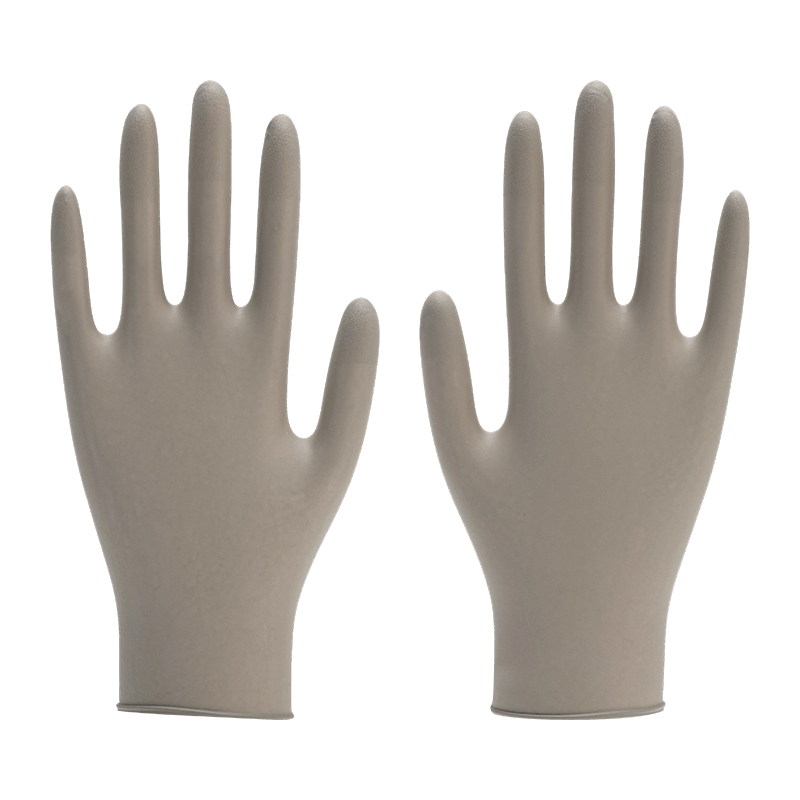 Medical-Grade Powder-Free Nitrile Examination GlovesThin 3–4 mil film delivers the tactile precision clinicians need for daily patient contact, balancing sensitivity with low per-task cost.View Product →
One of the most frequently reordered items in the medical range is a 9-inch powder-free glove at this gauge, because it gives practitioners the precision they need while keeping cost per task low.
Mid-Range Gloves (5-6 Mil)
Dental clinics, cleaning teams and light maintenance crews often settle on 5 to 6 mil. The extra film adds confidence when handling cleaning chemicals or rough surfaces, yet the gloves still allow enough movement for detailed work. On jobs that involve wet or oily parts, a textured finish can compensate for the slightly thicker material.
Heavy-Duty Gloves (7 Mil and Above)
When a task involves sharp edges, rough components or extended contact with aggressive chemicals, a 7 to 9 mil glove is usually the right call. The additional thickness translates directly into longer wear time and better resistance to punctures and tears. For automotive and industrial maintenance, we routinely supply fully textured 12-inch gloves in this range - the longer cuff and thicker film are what make them suitable for dirty, demanding work.
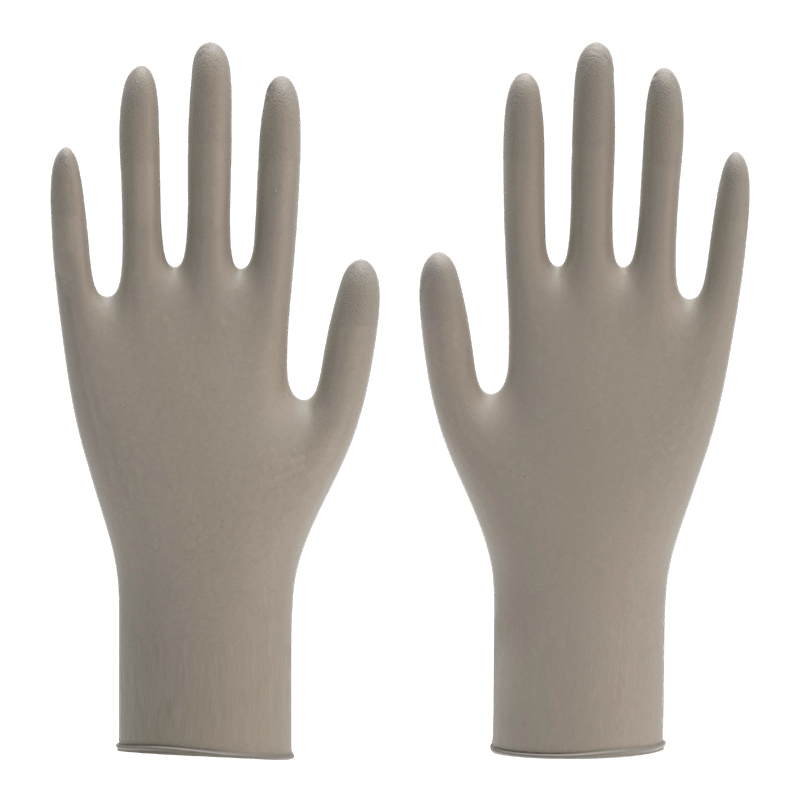 Industrial Textured Nitrile Gloves for Heavy-Duty UseThicker 12-inch fully textured gloves resist punctures and tears, but the secure grip also supports longer wear in demanding or slippery tasks.View Product →
A Note on Food Processing
Food processing is a special case. Thickness matters there, but grip often matters more. A 4 mil glove with fingertip texture on wet produce can outperform a smooth 6 mil glove, because workers keep the gloves on longer when the grip feels secure and the hand stays comfortable.
Food-Grade Fingertip-Textured Nitrile GlovesFingertip texture and 4 mil film improve grip on wet produce, letting workers keep gloves on longer while maintaining comfort and hygiene.View Product →How to Verify the Thickness You Are Quoted
Thickness numbers only help if you trust the source. In our experience, these checks separate serious suppliers from those who simply repeat a specification sheet.
- Ask which measurement point is quoted. If the supplier quotes only the fingertip reading, expect the palm to be thinner, and ask for all three values.
- Request a certificate of analysis for the batch. Well-run factories test each production batch and can provide the average thickness and the range observed.
- Measure a sample yourself. A small flat-anvil thickness gauge is inexpensive, and checking a glove takes under a minute.
Remember that one reading has limited value. What matters is consistency. If you measure five gloves from the same box and the thickness varies by more than about half a mil at the same point, the production process may be unstable. Consistent thickness is one of the first signs we watch for in our own quality checks.
Measure Twice, Order with Confidence
Measuring nitrile glove thickness is not complicated, but the details decide whether the numbers tell the truth. Know the difference between mil and millimeter, measure at the fingertip, palm and cuff, use a flat-anvil gauge, and compare specifications that refer to the same point. Thickness is the quickest objective indicator of the protection level you are paying for, and the more carefully you verify it, the fewer surprises you will get from a bulk order. For the wider selection process, our detailed guide to nitrile glove types and thickness covers the subject in depth, and you can explore the full nitrile glove range to see how gauges are matched to medical, industrial, food and biosafety applications.
Featured Products
Recommended Products
News
-
-
Choosing the right nitrile glove size does not have to feel like guesswork. In our years of producing examination, industrial, food-grade, and biosafety nitrile gloves, we have seen many buyers ask t...
READ MORE -
If you buy disposable gloves in bulk, you have probably asked a supplier a very simple question and received a rather slippery answer: how many gloves are in a case? The honest short answer is usuall...
READ MORE -
If you buy disposable gloves by the case, the moment of truth happens the first time a glove fails. The puncture, torn cuff, or stiff film is not an isolated accident. It is the visible result of a c...
READ MORE
Get A Free
Custom Quote!
Custom Quote!

We are committed to providing integrated solutions for nitrile gloves and non-woven products.
Get a Quote
Disposable Gloves
Quick Links
E-mail
gatherlucky-sales5@nt-huifu.com
Call Us
+86-18012229099
+86-18012229096
+86-18012229099
AddressNo.7 Wenzhou Road,Economic Development Zone,Shuyang County,Suqian, Jiangsu Province, China, 223600
copyright © Jiangsu Complete Sincerity Medical New Materials Co.,Ltd. All rights reserved.
 Registration Number: 2021200 / 2021200
This website is intended for users outside of China