
 English
 Español
 日本語
日本語 русский
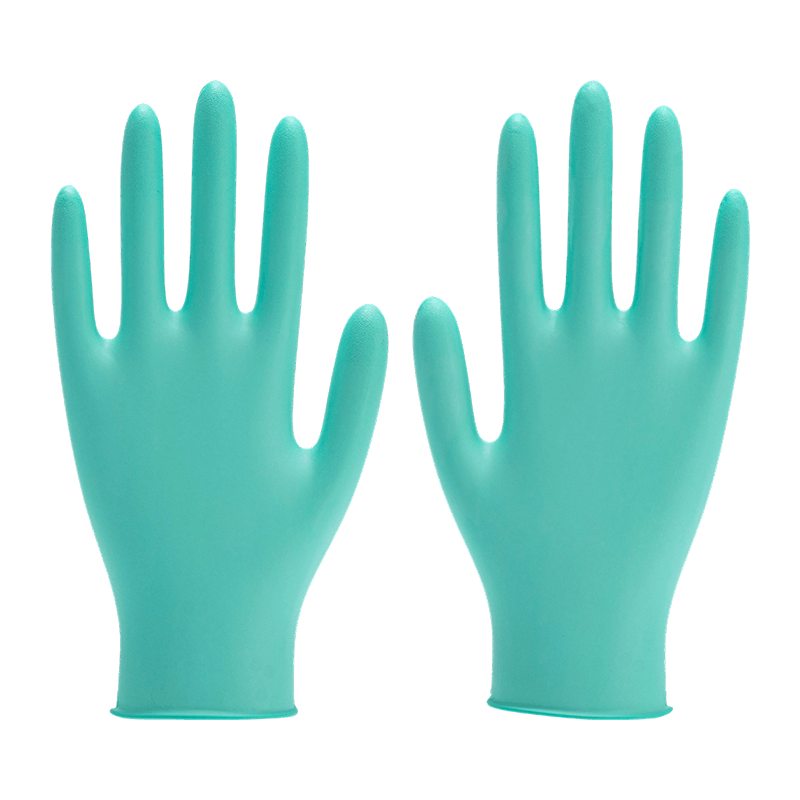

Bottom line first Nitrile gloves are now the dominant choice for medical use across most healthcare settings — offering latex-level barrier protection without allergy risk, broader chemical resista...
READ MORE
News Category
Product Category
Nitrile vs Latex Gloves: Which One Actually Protects Better?
If you need one answer: nitrile gloves are the better default choice for most tasks, because they resist punctures better, hold up against a wider range of chemicals, and carry no risk of triggering a latex allergy. Latex still wins on stretch and tactile feel, which is why it hasn't disappeared from operating rooms and fine motor-skill work. The right pick really comes down to what your hands are touching and who's wearing the glove.
Below is a breakdown of where each material actually performs better, backed by lab data rather than marketing claims, so you can match the glove to the job instead of guessing.
What nitrile and latex gloves are actually made of
Latex gloves come from natural rubber tapped out of rubber trees. The material is processed into a liquid latex compound, dipped onto hand-shaped formers, and cured. Because it's a natural polymer, latex has a molecular structure that stretches and recovers extremely well, which is why the glove feels like a second skin.
Nitrile gloves are made from nitrile butadiene rubber (NBR), a fully synthetic copolymer built in a lab rather than harvested from a plant. There is no natural rubber protein anywhere in nitrile, which is the root reason it doesn't trigger latex allergies. Manufacturers can also tune the formulation — thickness, softness, accelerator chemistry — in ways that aren't possible with a naturally occurring material.
Why this manufacturing difference matters day to day
Because nitrile is synthetic, its properties are far more consistent from batch to batch, and manufacturers can engineer it to resist specific chemicals or sharp objects. Latex, being a natural product, varies slightly by harvest and season, though modern processing has narrowed that gap considerably.
Puncture resistance and durability compared
This is where the two materials diverge the most. A peer-reviewed study published in the British Dental Journal tested both glove types with a steel puncture probe and a dental injection needle on a tensile testing rig, and found nitrile gloves had significantly higher puncture resistance than latex when tested against the steel probe. Industry lab comparisons put the real-world gap at roughly three to five times more puncture-resistant than latex at equal thickness.
The practical effect shows up in how the gloves fail. Nitrile tends to split visibly the moment it's punctured, which immediately alerts the wearer that the barrier is compromised. Latex is more prone to small tears that can go unnoticed, which is a real concern in settings where contamination exposure needs to be caught right away.
| Property | Nitrile | Latex |
|---|---|---|
| Puncture resistance | Significantly higher (steel probe testing) | Lower baseline resistance |
| Tensile strength | Higher, resists tearing under stress | Good, but lower than nitrile |
| Elasticity and stretch | Improved in modern formulas, still slightly less | Superior, conforms closely to the hand |
| Shelf life | Longer, less prone to degradation | Shorter, degrades faster with heat and light |
| Failure mode | Visible splitting when compromised | Small tears that may go unnoticed |
Chemical resistance for cleaning, lab, and industrial work
If gloves are going anywhere near solvents, oils, or industrial chemicals, this category decides the outcome more than any other. Nitrile has the broadest chemical resistance of the common glove materials, including strong performance against oils, greases, fuels, and many solvents that would degrade latex on contact.
Latex, by contrast, holds up fine against water-based substances and many biological fluids, but it breaks down quickly when exposed to oils, solvents, and certain chemicals that swell or dissolve natural rubber. For anyone working with automotive fluids, paint, degreasers, or lab reagents, that's not a small caveat — it's the difference between a glove that protects for the full task and one that fails partway through.
Where latex still holds up chemically
Latex remains a reasonable choice for tasks involving mostly water, blood, or general biological fluids, such as routine medical exams that don't involve solvent exposure. It's simply not the material to reach for once petroleum-based products or aggressive solvents enter the picture.
Allergy risk: the deciding factor for many buyers
Latex contains naturally occurring proteins that some people's immune systems identify as a threat, triggering anything from mild skin irritation to severe anaphylaxis. This isn't a rare edge case. According to NIOSH, between 8 and 12% of the roughly 7 million healthcare workers in the U.S. show evidence of latex sensitization. A 2016 review of global epidemiological data found average latex allergy prevalence worldwide sits at 9.7% among healthcare workers, 7.2% among susceptible patients, and 4.3% among the general population.
Certain groups face even higher risk. The American Latex Allergy Association notes that sensitization can reach up to 68% in children with spina bifida, largely due to repeated surgical exposure to latex products early in life. For any workplace with frequent hand-to-glove contact across many different people, that risk compounds — a single latex-sensitized employee or patient can turn a routine glove choice into a medical incident.
Nitrile carries none of this risk since it contains no natural rubber protein at all. This is the single biggest reason healthcare facilities, food service operations, and many workplaces have shifted their default stock to nitrile over the past two decades, even in roles where latex's tactile advantage would otherwise be preferred.
Fit, feel, and tactile sensitivity
Latex's biggest, longest-standing advantage is how it feels on the hand. Its natural elasticity lets it conform tightly to fingers and knuckles, which is why it's still favored for tasks requiring fine motor control, like suturing or detailed dexterity work. The material essentially moves with the hand rather than against it.
Nitrile has closed most of this gap. Modern nitrile gloves are manufactured thinner while retaining their strength, and the material warms and softens slightly with body heat, creating a shrink-wrap effect that mimics the fit of latex. Many surgical-grade nitrile gloves now meet the tactile sensitivity benchmarks that used to be exclusive to latex, though users doing extremely fine work sometimes still report a preference for latex's initial out-of-box stretch.
Cost and availability considerations
Latex has historically been the cheaper option because natural rubber production infrastructure is well established and the material requires less processing than synthetic alternatives. That price gap has narrowed significantly as nitrile production has scaled globally, and in many markets nitrile is now priced competitively, sometimes even lower depending on supply conditions and raw material costs.
Availability favors nitrile for bulk industrial and medical purchasing today, since demand for latex-free options has pushed manufacturers to prioritize nitrile production lines. If cost is the only deciding factor for a low-risk task, it's worth comparing current per-box pricing directly rather than assuming either material has a fixed advantage, since this shifts with raw material markets.
Which glove fits which task
Rather than picking one material for everything, match the glove to what the hands will actually encounter. The following breakdown covers the most common use cases.
- Chemical handling, automotive work, painting: nitrile, due to its broad chemical resistance
- Food service and food prep: nitrile, to avoid allergy risk to staff or customers and for better resistance to oils and fats
- General medical exams with no chemical exposure: either material works, though nitrile removes allergy liability entirely
- Fine motor tasks like suturing or detailed lab work: latex if no allergy concern exists, nitrile as the safer default otherwise
- Cleaning with sharp debris risk (broken glass, metal shavings): nitrile, for superior puncture resistance
- Tattooing, piercing, or other skin-contact services: nitrile, since client latex sensitivity is common and hard to screen for in advance
How to make the switch without disrupting your workflow
Switching from latex to nitrile is straightforward for most operations, but a few practical steps make the transition smoother.
- Order a small sample box first and have staff test fit and dexterity before committing to bulk purchasing.
- Check thickness ratings — nitrile gloves in the 3 to 5 mil range typically match the feel of standard latex exam gloves.
- Look for accelerator-free formulations if any staff report mild skin irritation, since some nitrile gloves use chemical accelerators that can cause reactions distinct from a true latex allergy.
- Confirm the glove meets the relevant standard for the task, such as ASTM D6319 for medical-grade nitrile exam gloves.
- Update any signage or safety data sheets that reference latex specifically, so the facility stays accurately labeled as latex-free if that's the intended outcome.
Featured Products
Recommended Products
News
-
-
A hospital buyer, a plant supervisor, and a food processing manager can all type the same two words into a search engine—nitrile gloves—and each need a different product at the end of it. The materia...
READ MORE -
Why Nitrile Gloves Dominate Every Disposable Glove Market Nitrile Gloves have become the dominant disposable glove material globally across medical, industrial, food, and biosafety applications becau...
READ MORE -
If you need disposable gloves that are durable, latex-free, and resistant to a wide range of chemicals and punctures, nitrile gloves are the best all-around choice for the majority of medical, industr...
READ MORE
Get A Free
Custom Quote!
Custom Quote!

We are committed to providing integrated solutions for nitrile gloves and non-woven products.
Get a Quote
Disposable Gloves
Quick Links
E-mail
gatherlucky-sales5@nt-huifu.com
Call Us
+86-18012229099
+86-18012229096
+86-18012229099
AddressNo.7 Wenzhou Road,Economic Development Zone,Shuyang County,Suqian, Jiangsu Province, China, 223600
copyright © Jiangsu Complete Sincerity Medical New Materials Co.,Ltd. All rights reserved.
 Registration Number: 2021200 / 2021200
This website is intended for users outside of China